A 21st Century Clavichord:
Exploring Clavichords as Precedent Studies for the Design of a Modern Portable Keyboard Instrument
A Traditional Clavichord.
The typical clavichord is rectangular. The strings are strung between tuners along the right edge, and hitchpins on the left and back edge either perpendicular to or at a slight angle to the keyboard. The strings run across a bridge on the right side. The bridge is set on the soundboard, which is on top of the sound chamber. The keyboard is placed below the strings so that the tangents are aligned with the strings. [MORE INFO AND DESCRIPTION]. The soundboard and chamber are incredible important to the production of sound in an acoustic clavichord. It is also important to note that there is a significant amount of tension between the hitchpins and tuners, which also influences the form of the instrument.
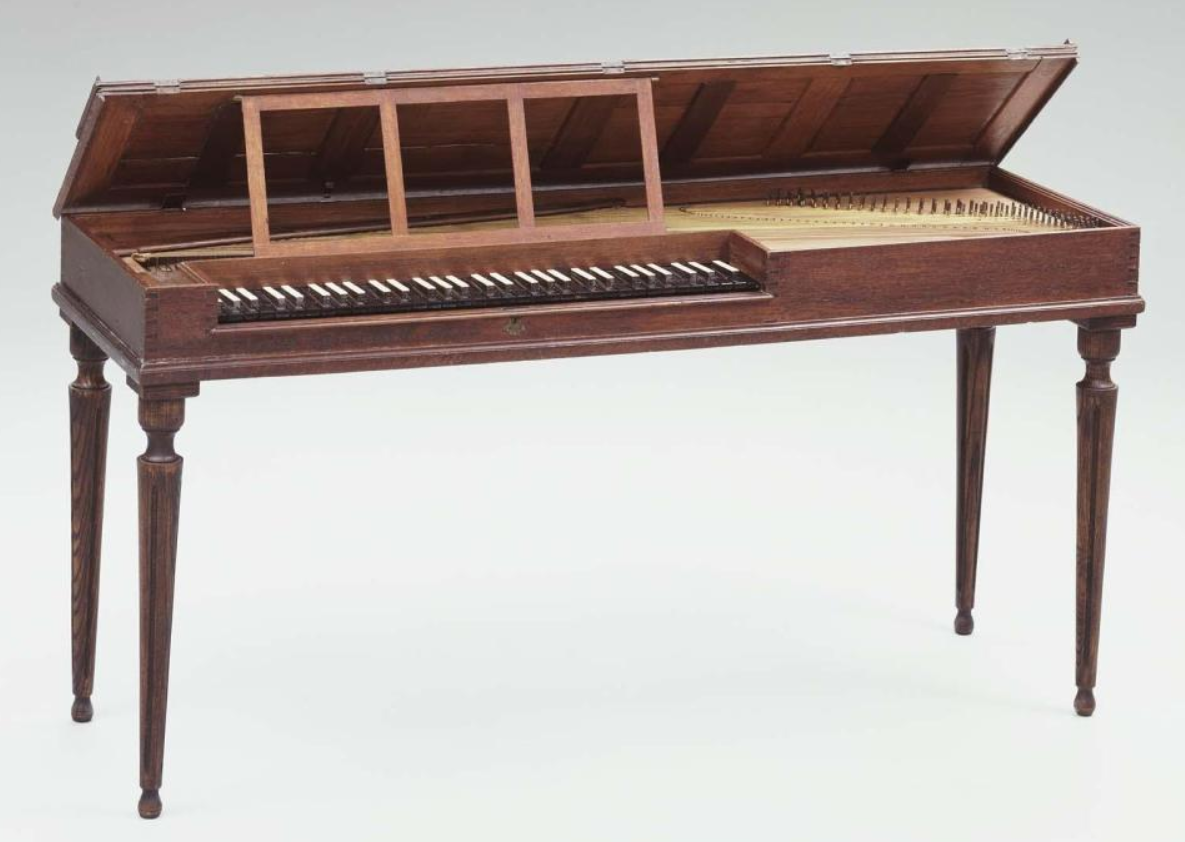
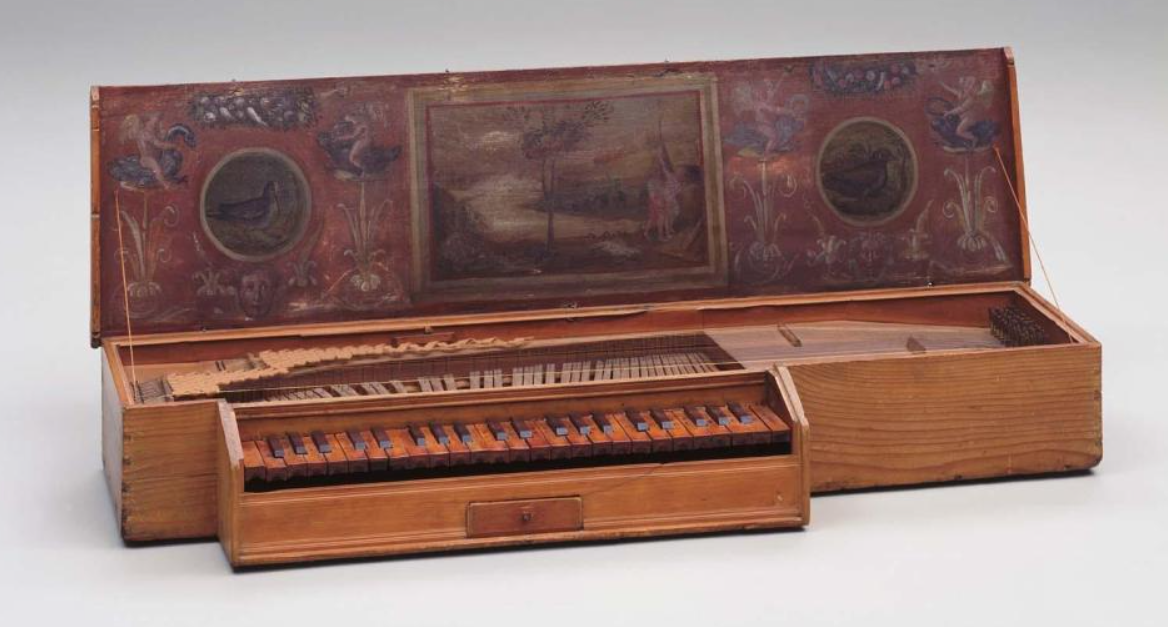
keyboard (Museum of Fine Arts, Boston)
The Basic Form
In order to develop a form, I first broke a typical clavichord design into is basic parts.
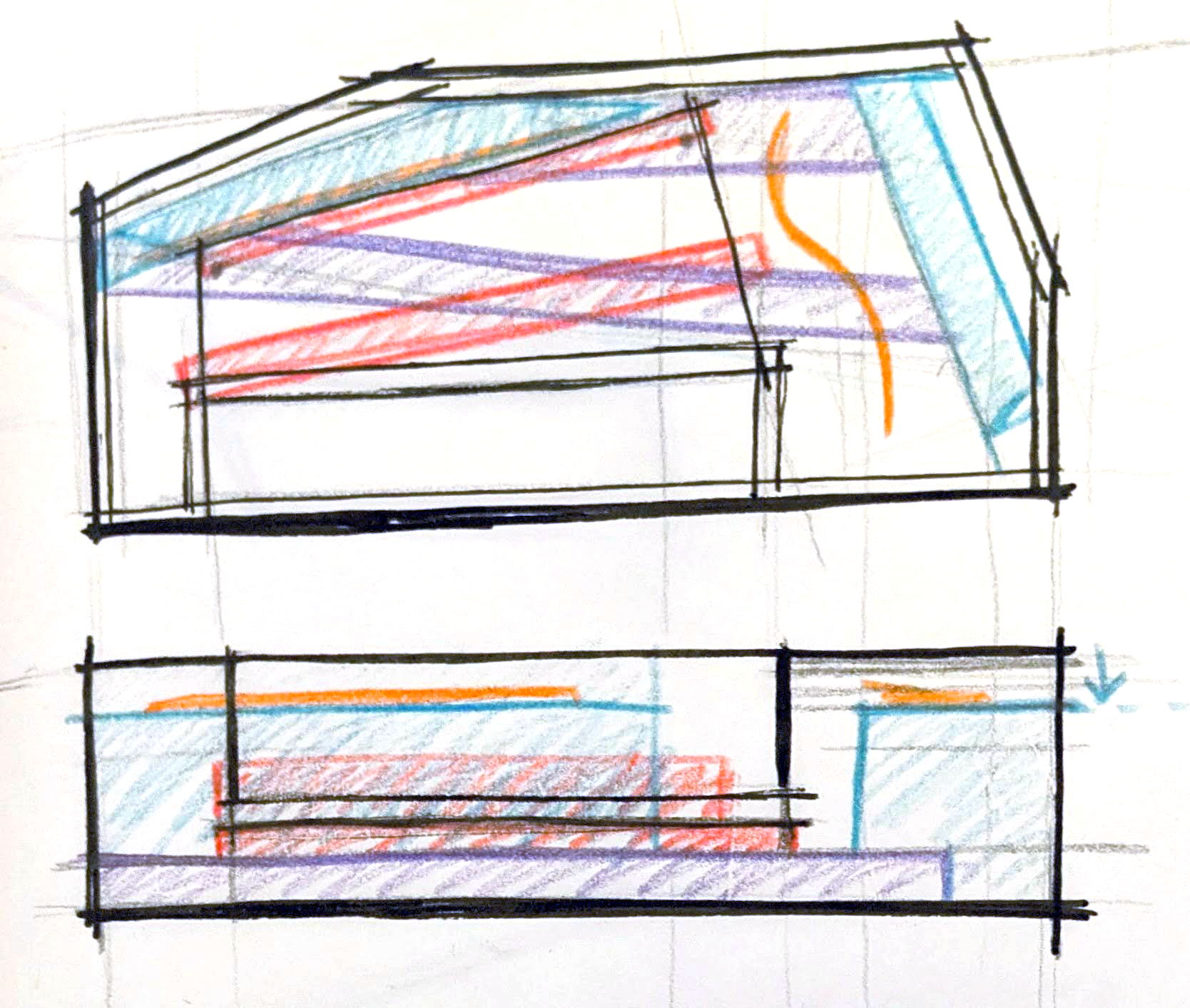
BLUE: Hitchpin & Tuner Attachment Blocks
RED: Balance Rail and Rack
ORANGE: Bridges
PURPLE: Structural Supports
The black outline is of potential casing design to contain the mechanism. (Keyboard is not Shown)
In order to make the instrument structurally sound and acoustically resonate, some additional parts are needed such as a soundboard and additional bracing. From here, one can see how the typically clavichord form is arrived at.
In a electric instrument, there is less need for acoustic resonance, so the structure could potentially be broken down farther. Additionally, materiality has less of an impact on an electronic instrument’s sound. Using a stronger material for the frame could allow much of the support structure to be eliminated. One of the innovations applied to the modern piano is a steel frame, which can support the tension of the strings without excessive bracing that older instrument require.
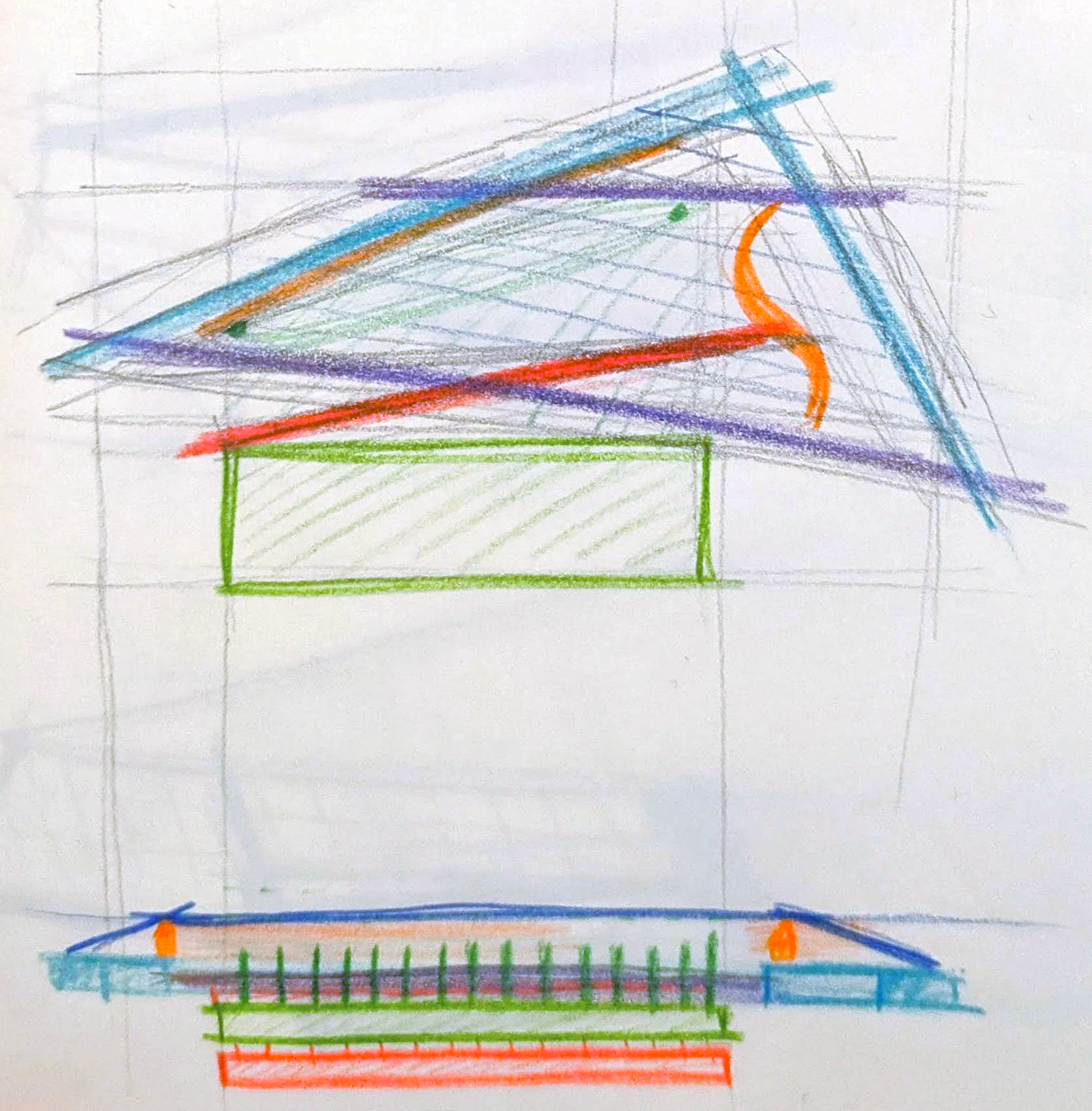
BLUE: Hitchpin & Tuner Attachment Blocks
RED: Balance Rail
ORANGE: Bridges
GREEN: Keyboard
PURPLE: Structural Supports
By additionally breaking down the structure, we can create an entirely pared down clavichord diagram with only the strictly necessary components floating in space. From here, any structurally or acoustically necessary additions can be made.
In this form the clavichord is essentially two components: a harp/zither-like string assembly (hitchpin & tuner attachment blocks, bridges, connecting support between hitchpin & tuners) is suspended over a keyboard assembly (keyboard, balance rail, and rack). The design of the instrument can can begin here.
The first part to be added will need to be a frame, which is needed to hold the string assembly and keyboard in place. The most minimal possible implementation would be to simply attach the balance rail and rack to the string assembly using a stick-like frame in strong material such as steel. After exploring several different forms I created a basic massing form in paper and sketchup.
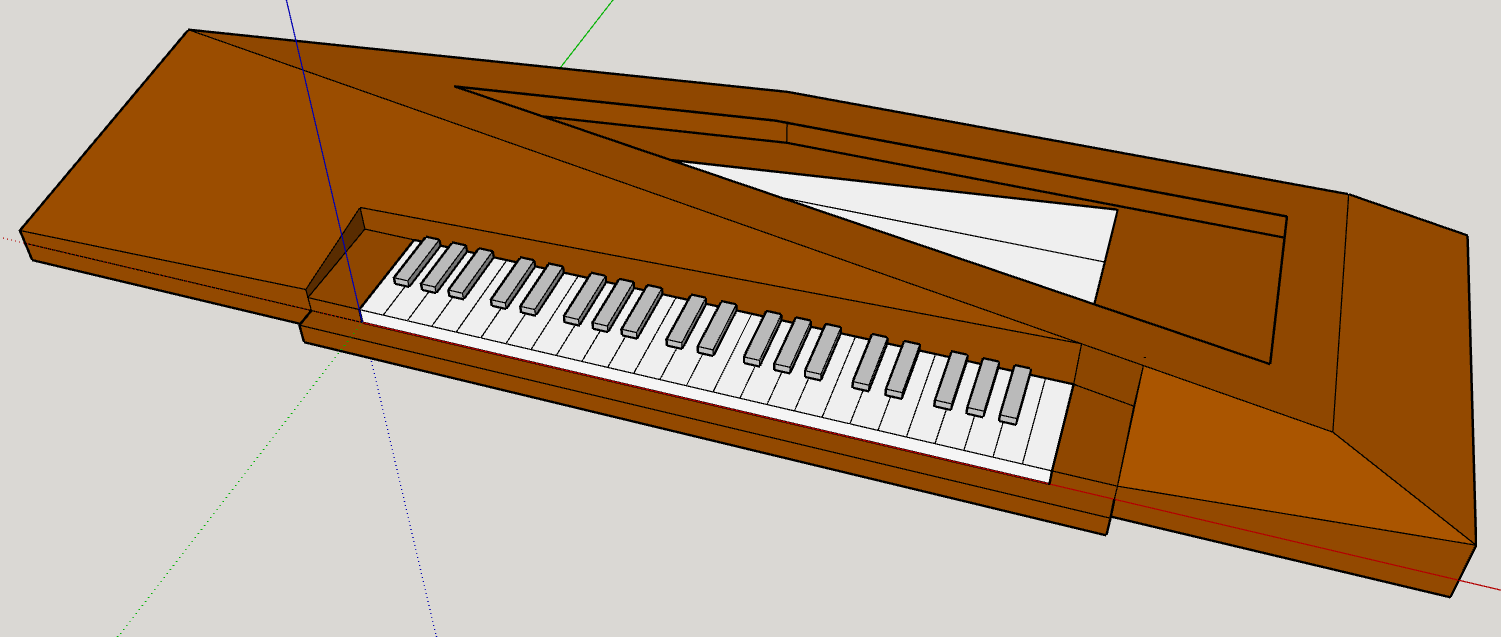
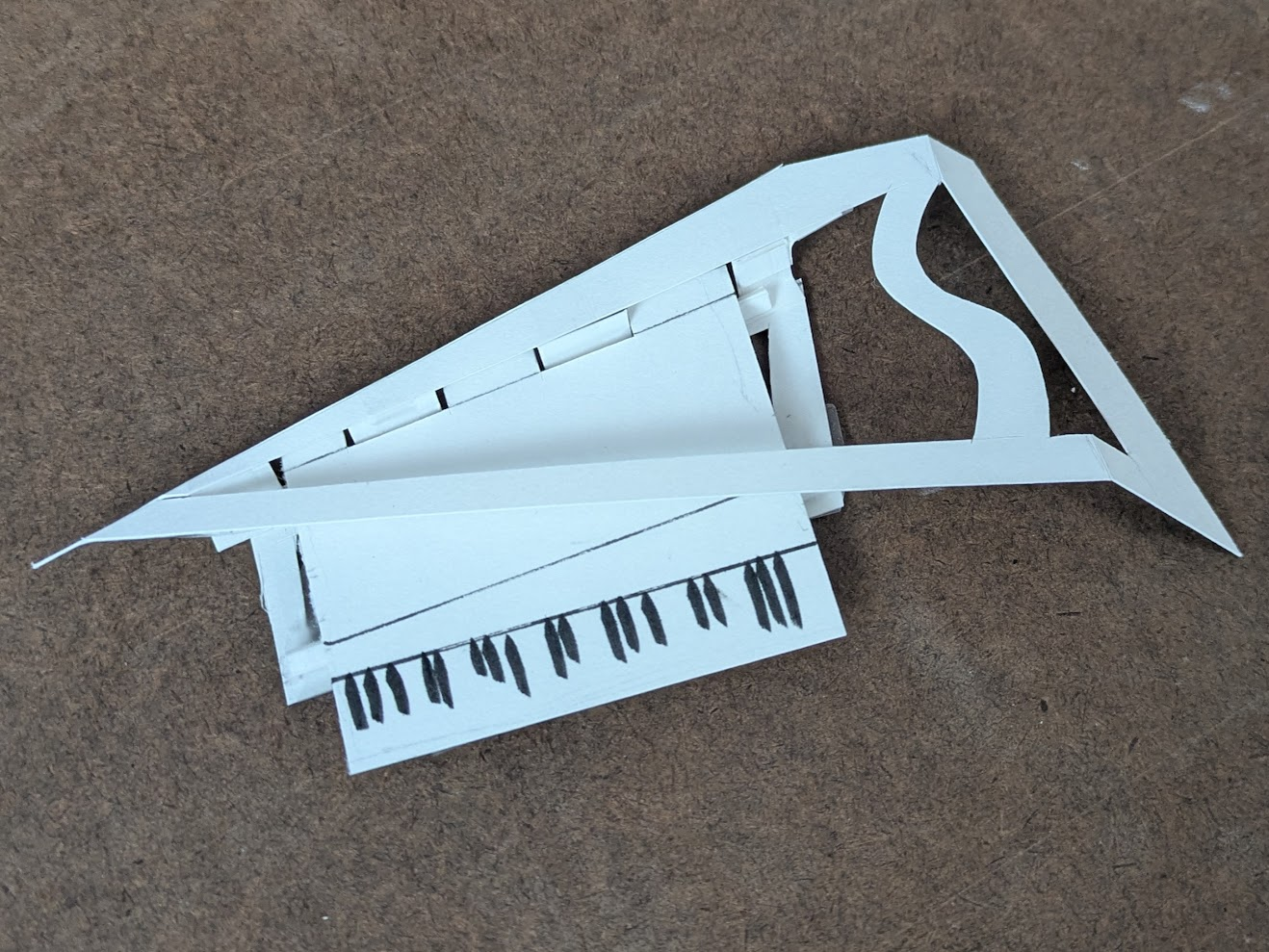
This design is nice, but may not be feasible in this exact form due to technical constraints of the strings, keyboard, and structural strength. My next step is to determine these constraints, then iterate between this massing model and and a more technical one in order to combine the two.