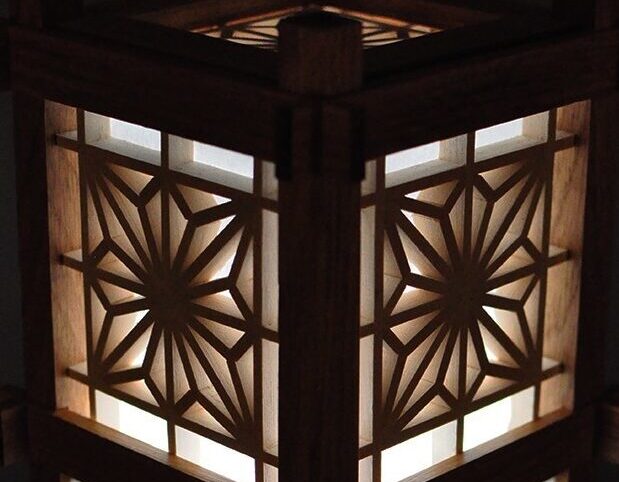
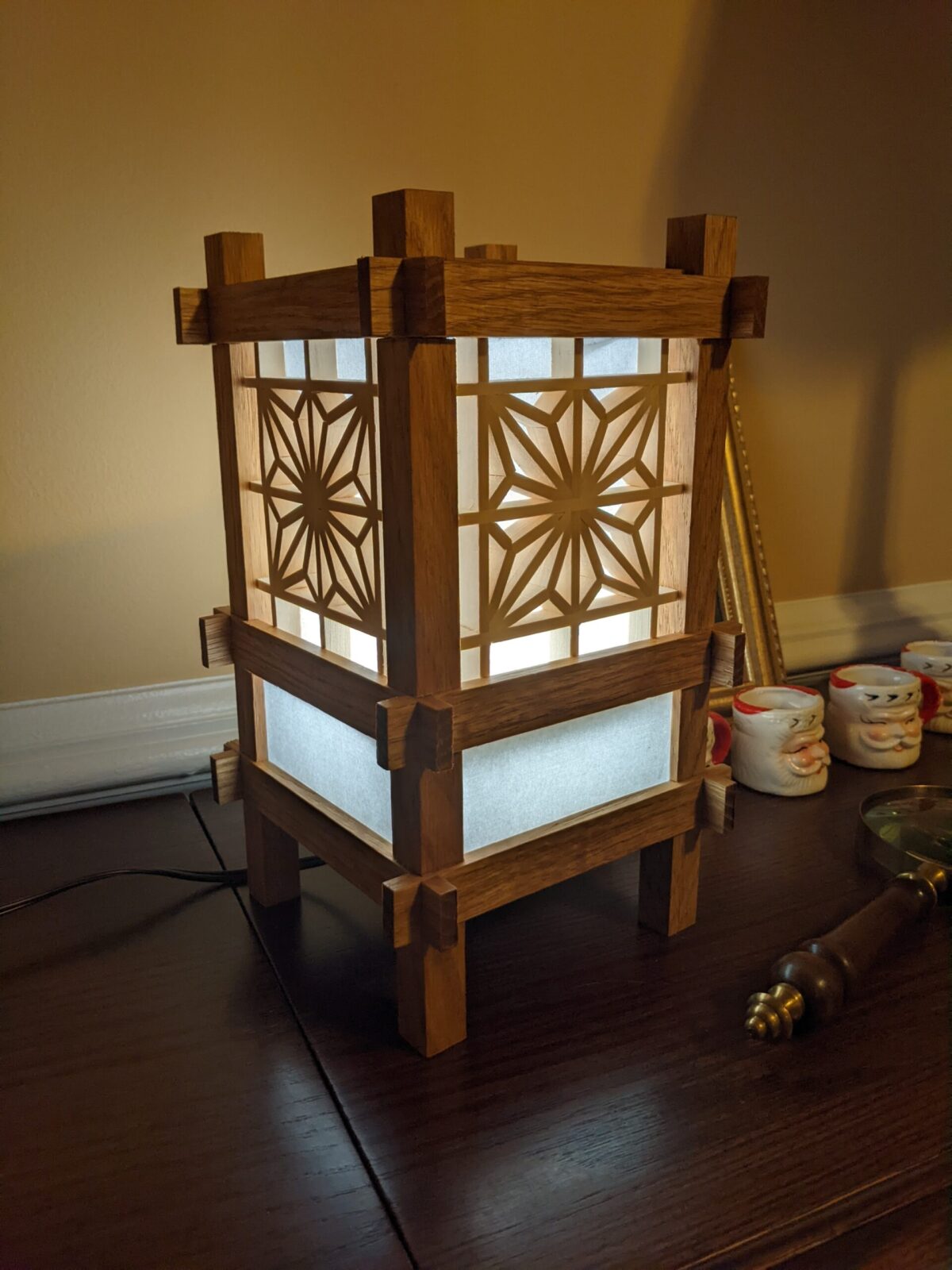
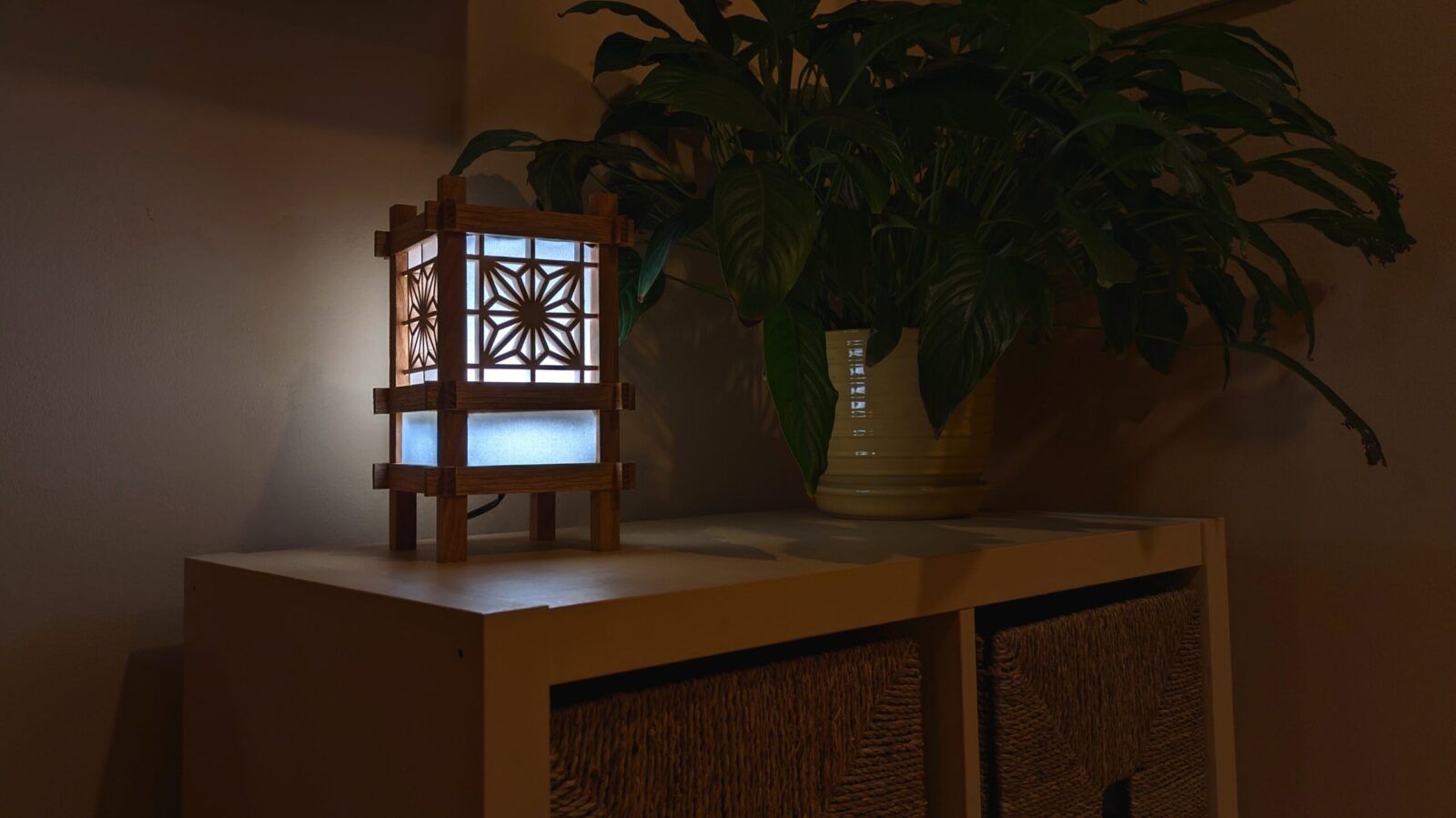
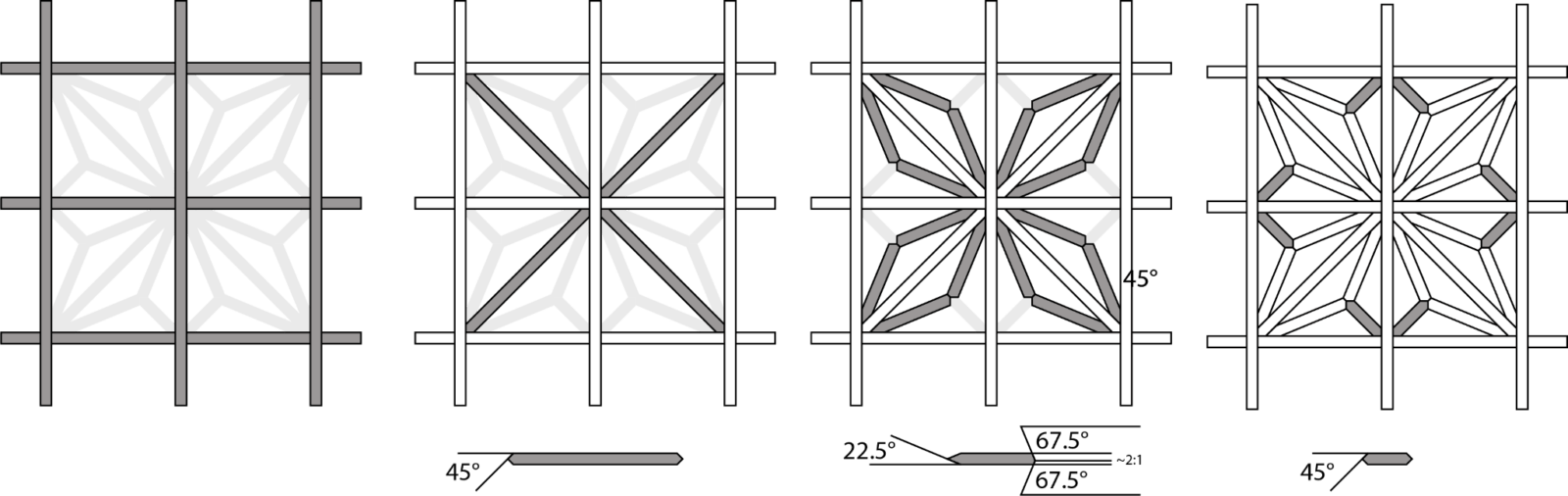
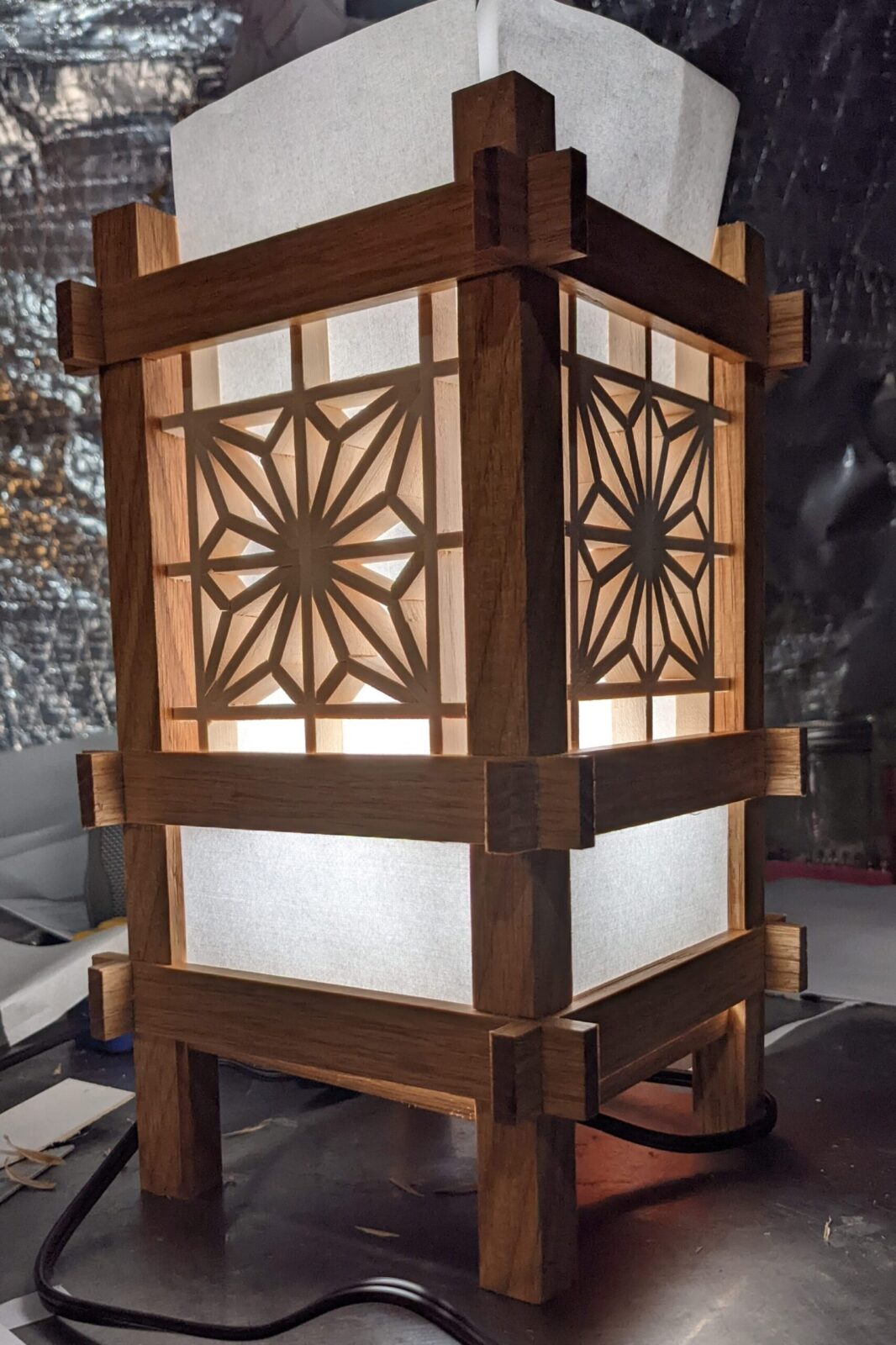
Kumiko is a traditional Japanese woodworking technique where a design is made using thin strips of wood cut at precise angles and tension-fit inside a lattice grid. It is typically used to make screens and room dividers, as well as smaller feature panels.
Gallery
Making the Kumiko Jigs
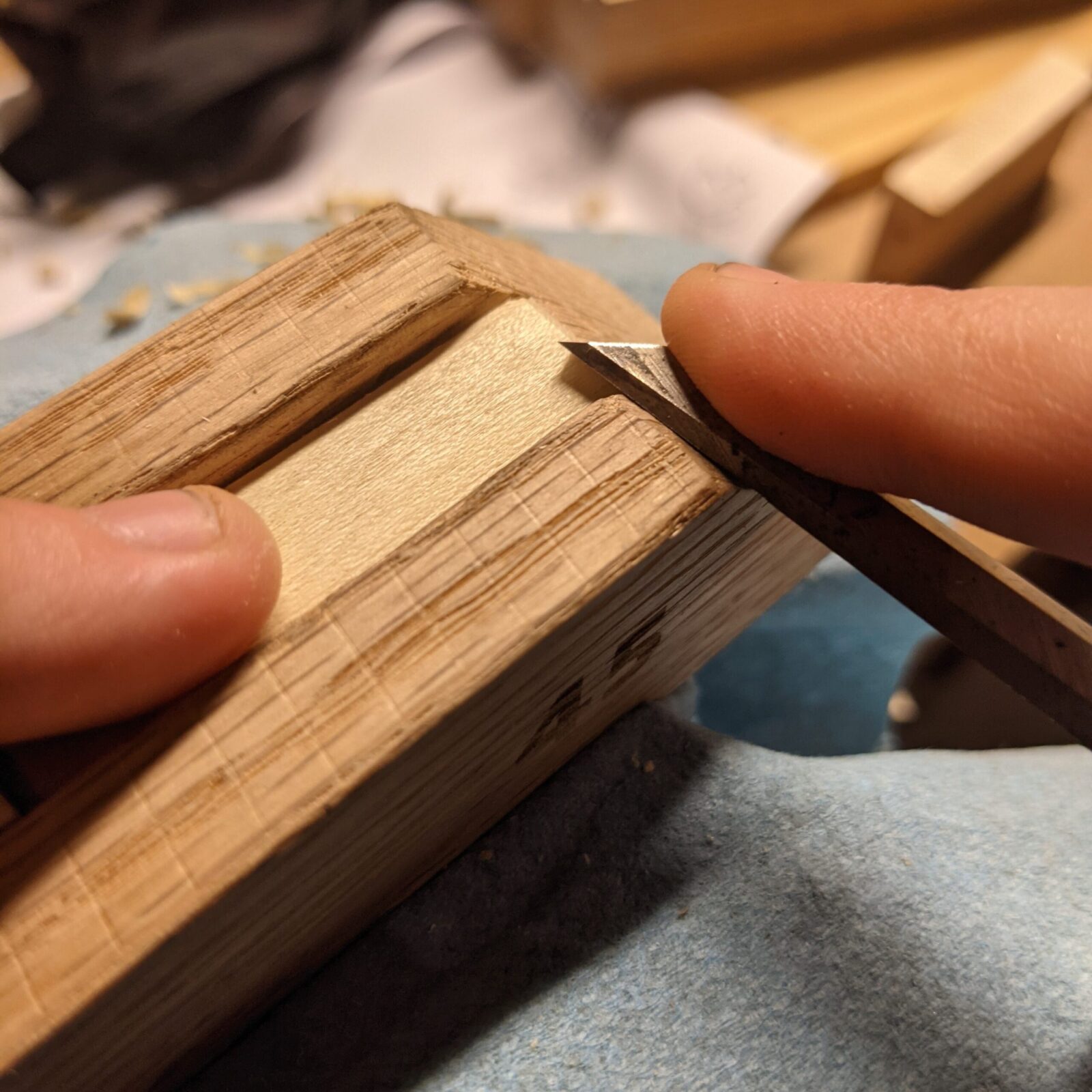
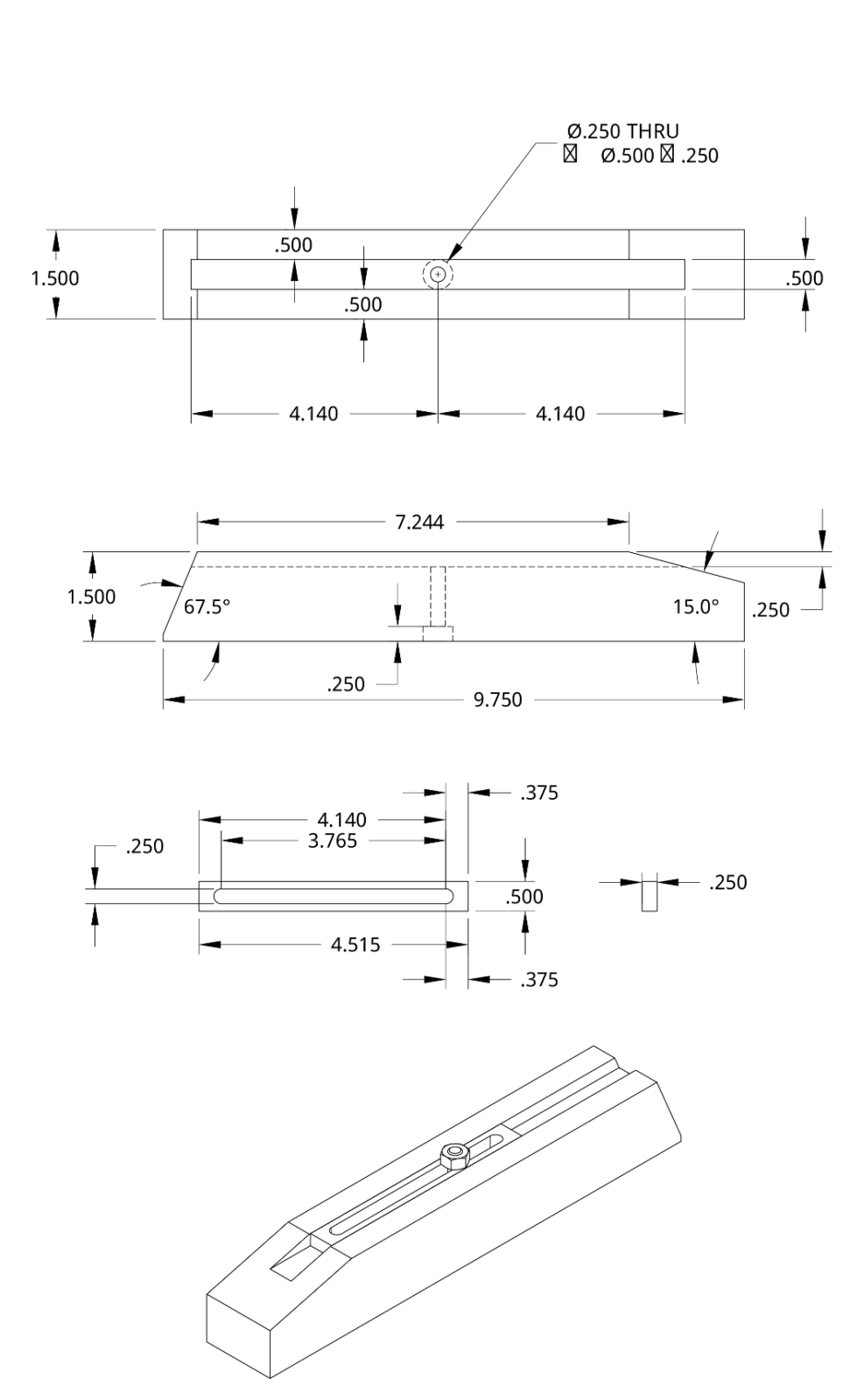
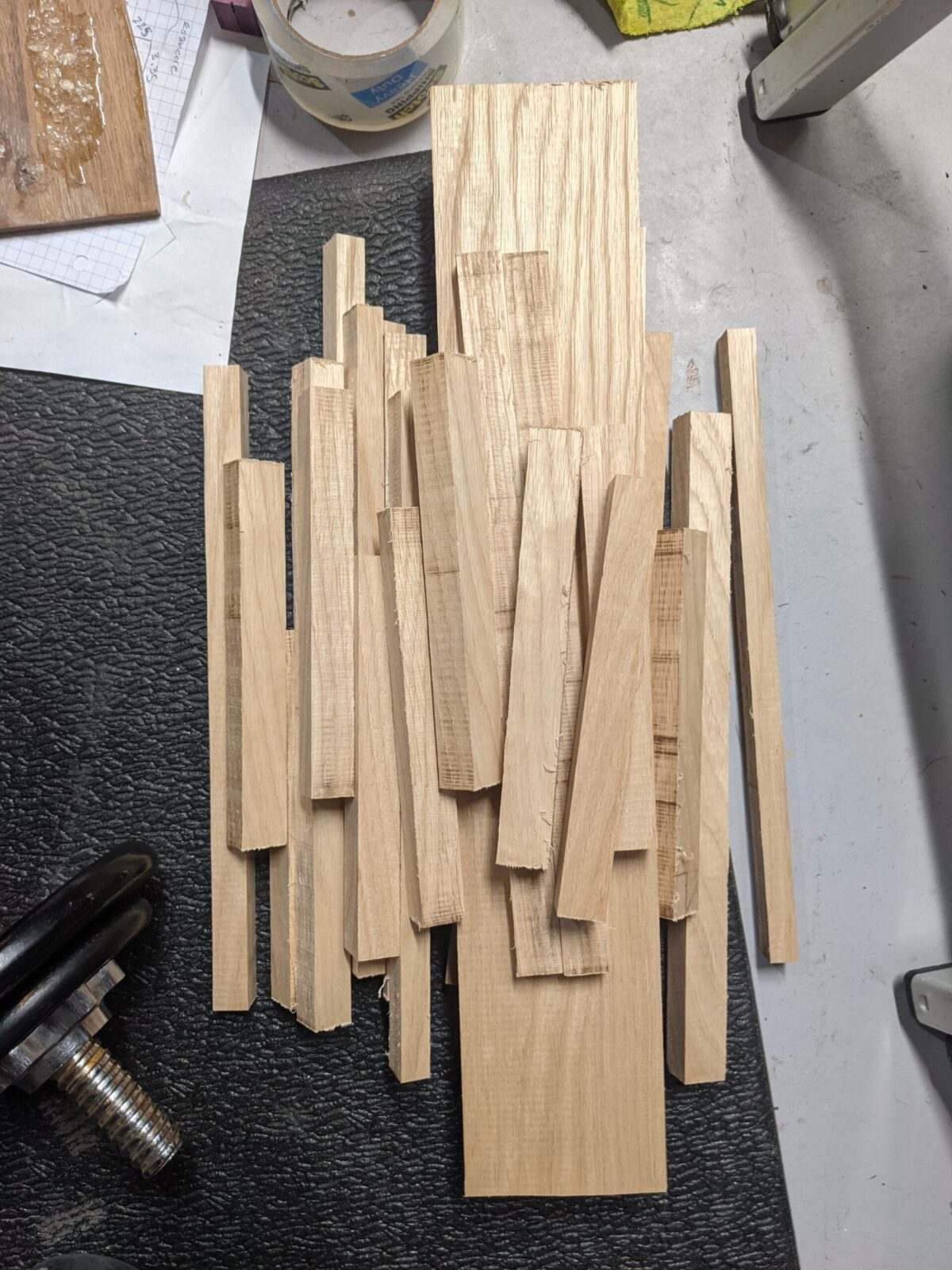
Traditionally, the precise angles used in kumiko designs are achieved using a chisel pressed against an angled block. A channel keeps the wooden strip in place, and a sliding stop block controls the piece’s length. They are typically made from a hardwood so the chisel does not tare them up.
For the square lattice asanoha kumiko pattern used in this lamp, the angles needed are 67.5, 45, and 22.5 degrees. 75, 60, 30, and 15 degree jigs are used in other common patterns. There are two instances of the 67.5 angle, which is useful in the asanoha pattern.
Making the Kumiko Grid
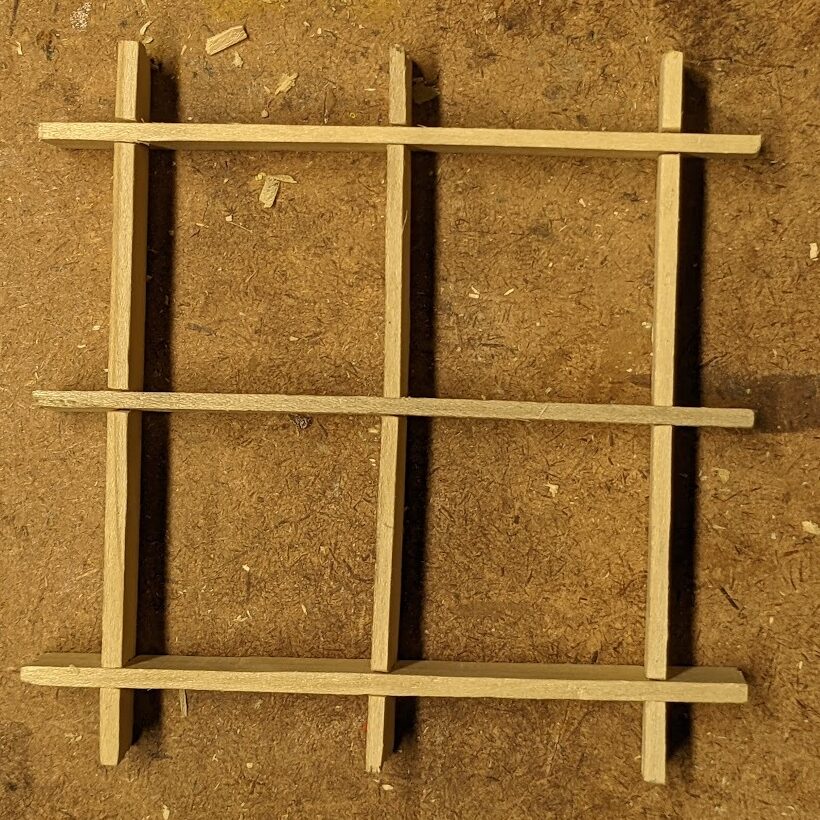
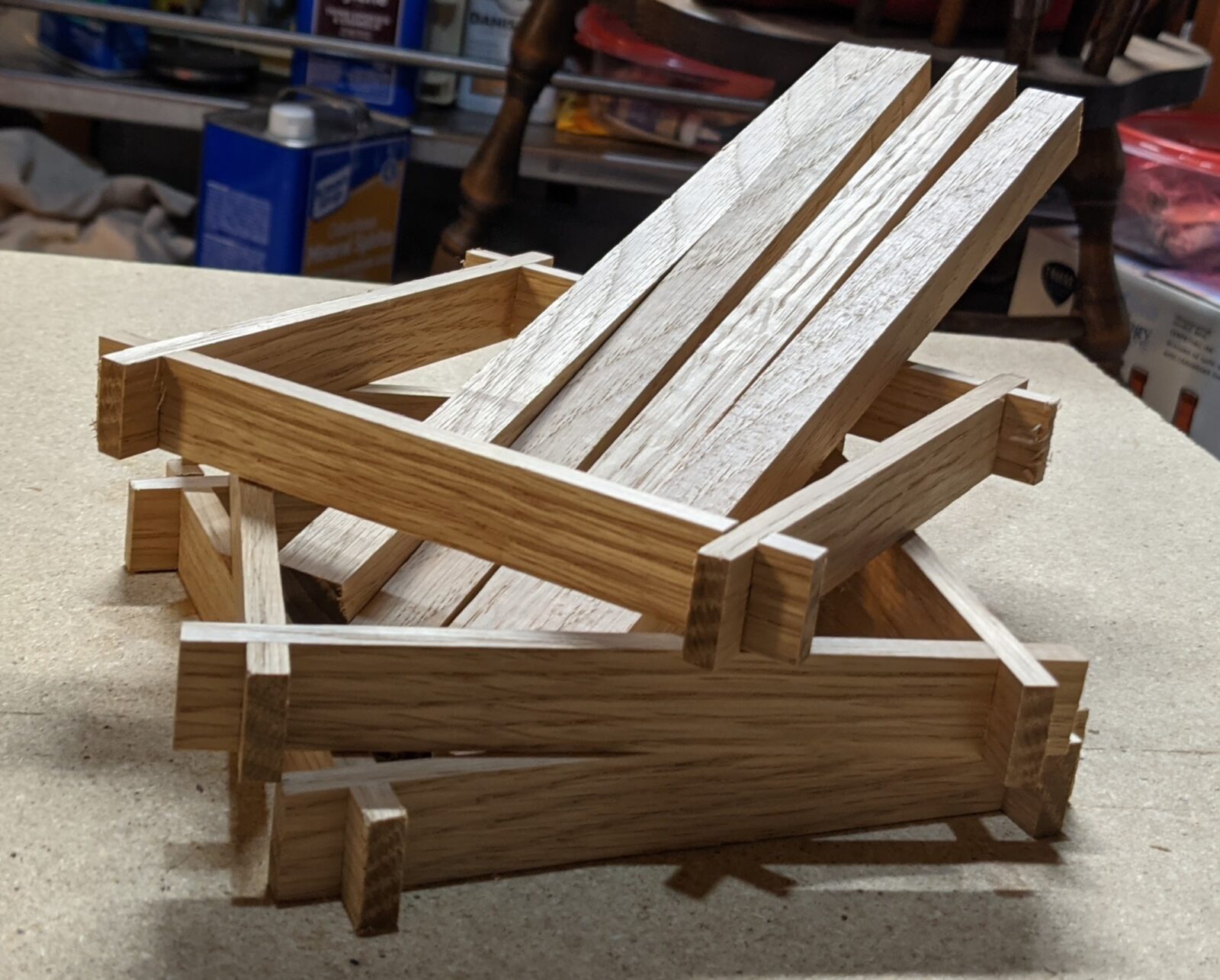
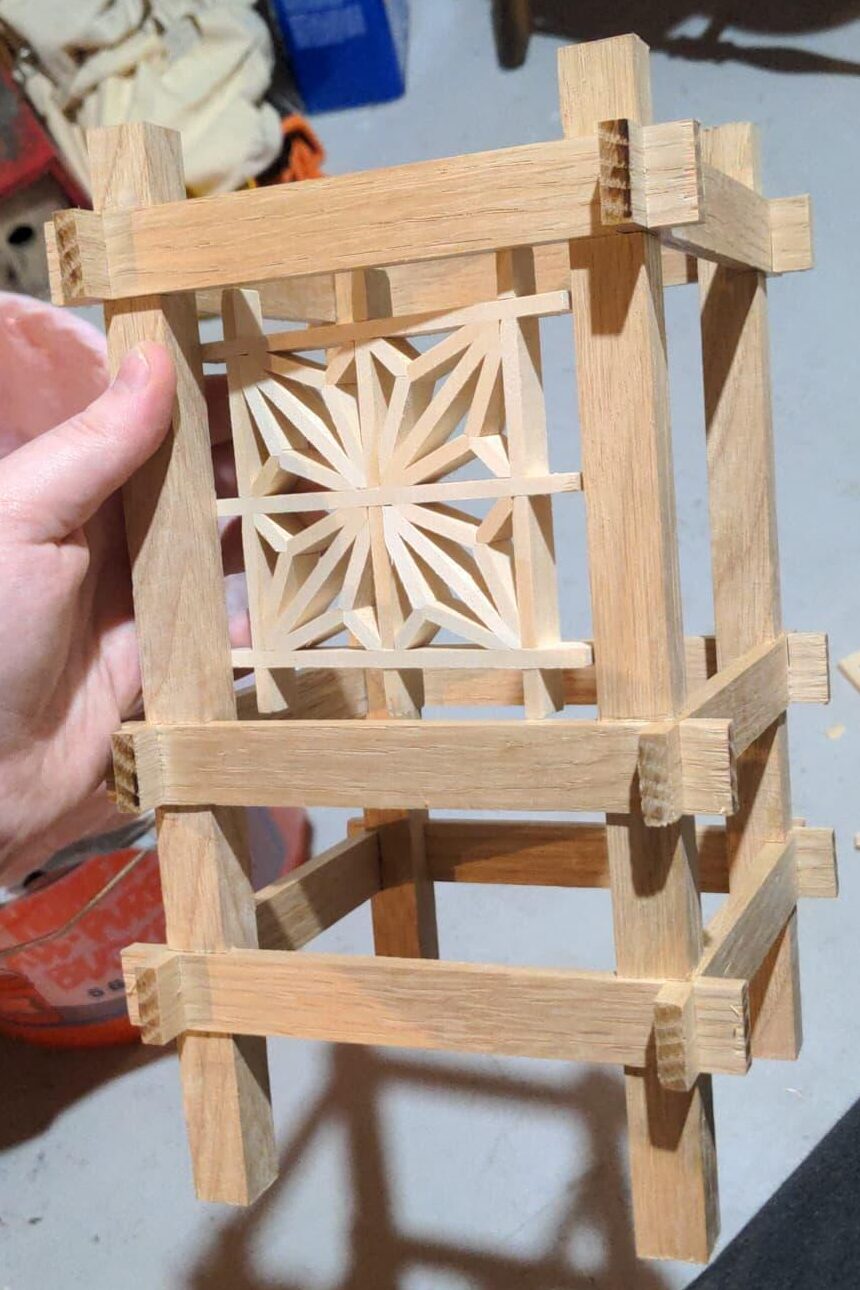
Kumiko patterns are built into lattices. Kumiko latices can be triangular or square. In this instance, I am using a square 2x2 lattice to achieve a small section of the design. The lattice constructed with snug cross-lap joints and no glue.
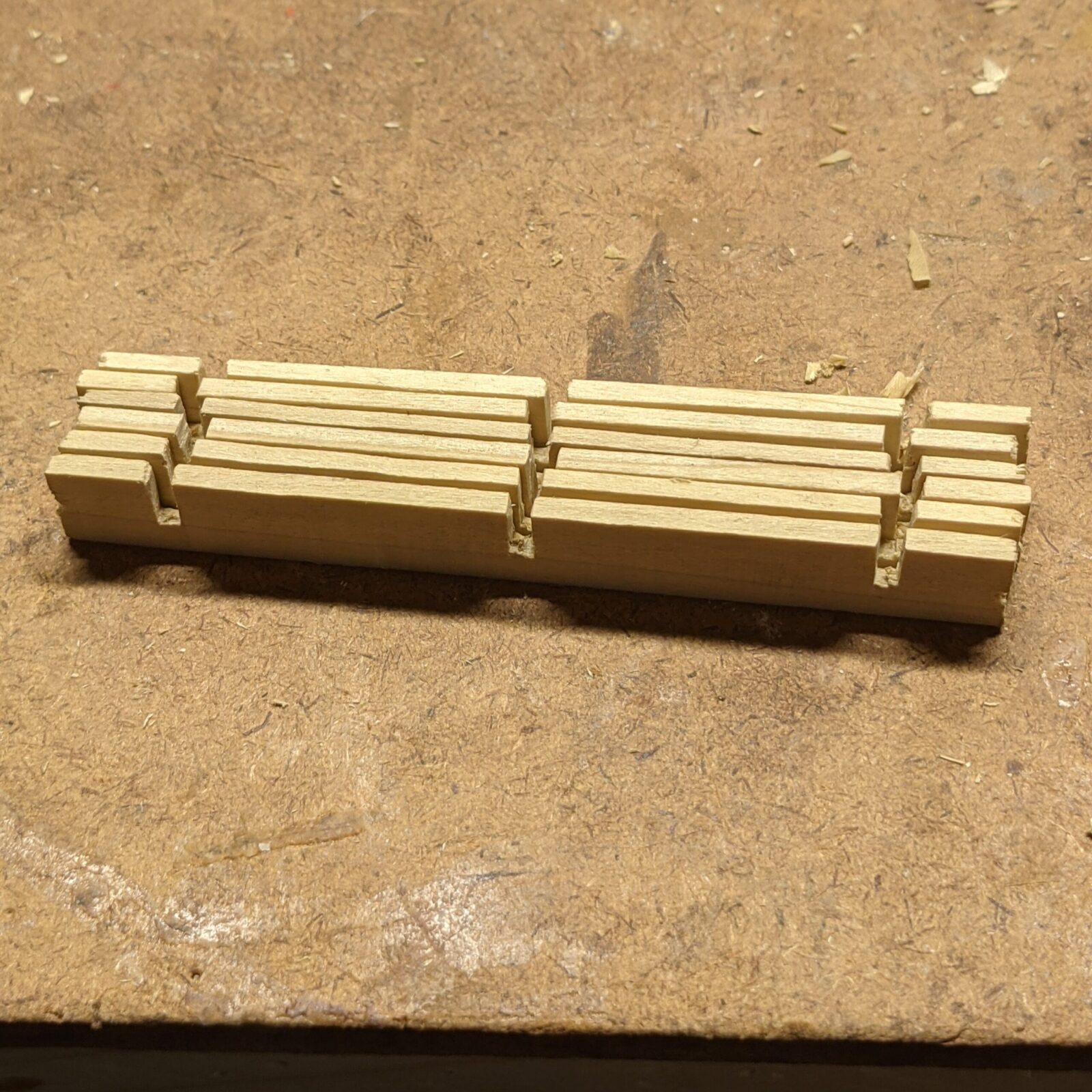
Next the interior strips are added. They are cut to the rough length, then angled and precisely fit using a chisel and the angle jigs. The jig's sliding stop block can be set to the correct length to cut multiple strips more quickly. They are fit into the lattice snuggly, where they should be held by tension.
The Lamp Frame
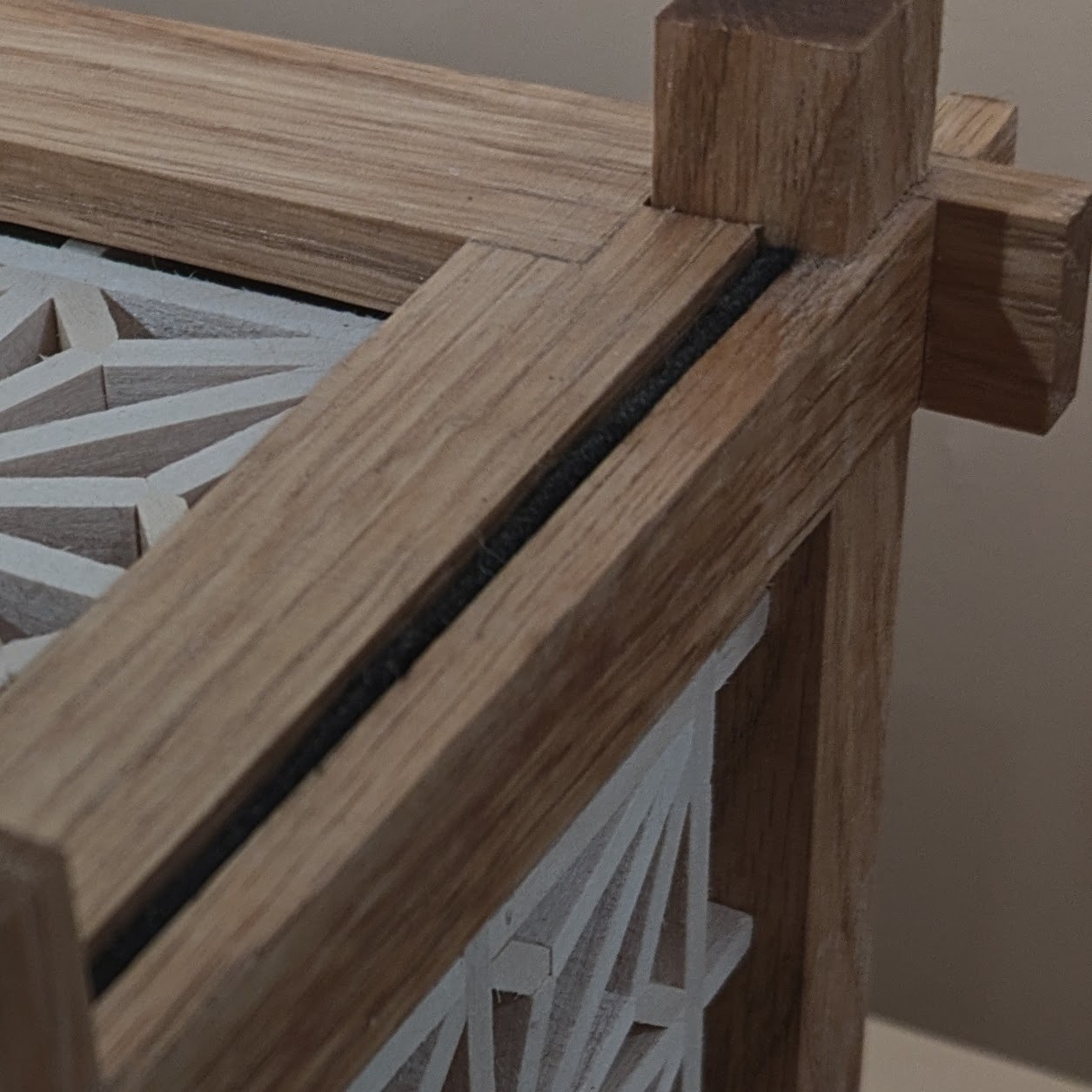
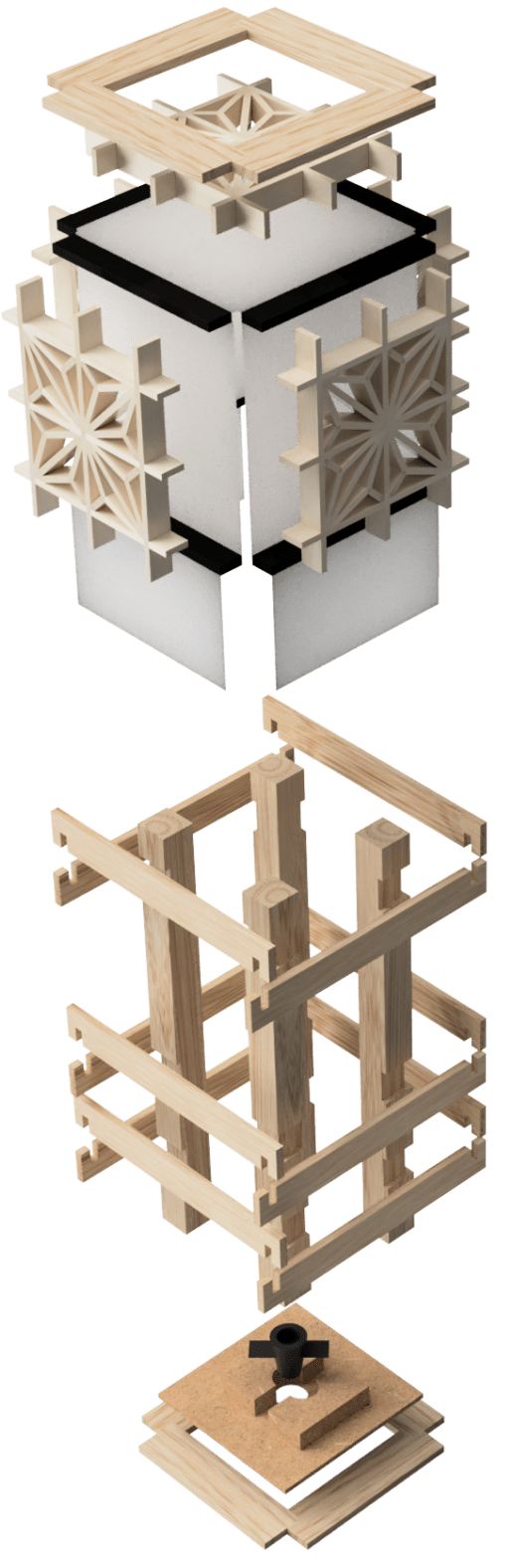
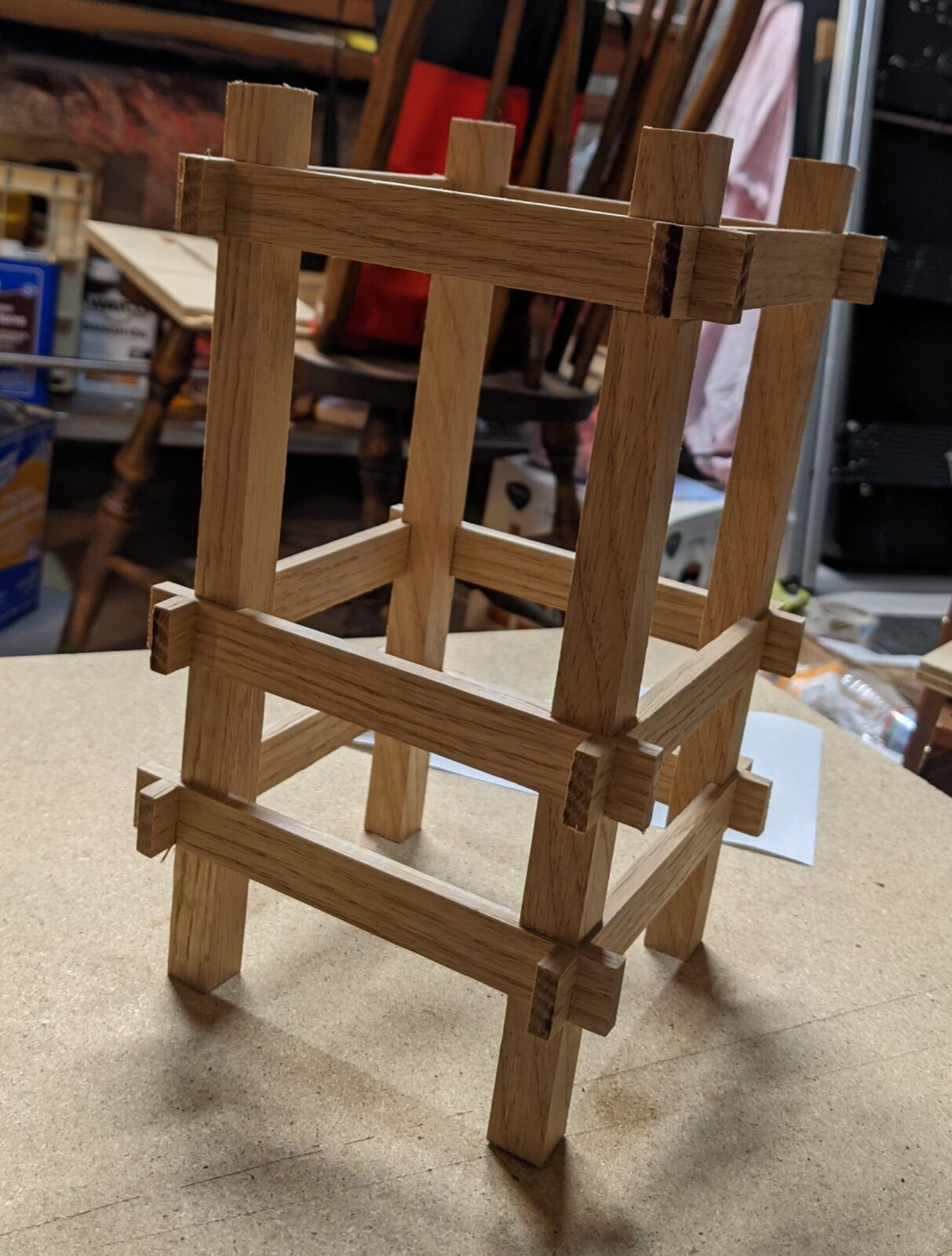
The lamp frame is designed to mirror the construction of the kumiko. It uses cross-lap and castle joints and the main frame can be entirely tension held. For added security, I did use glue in the final construction, but it was not essential to the structure.